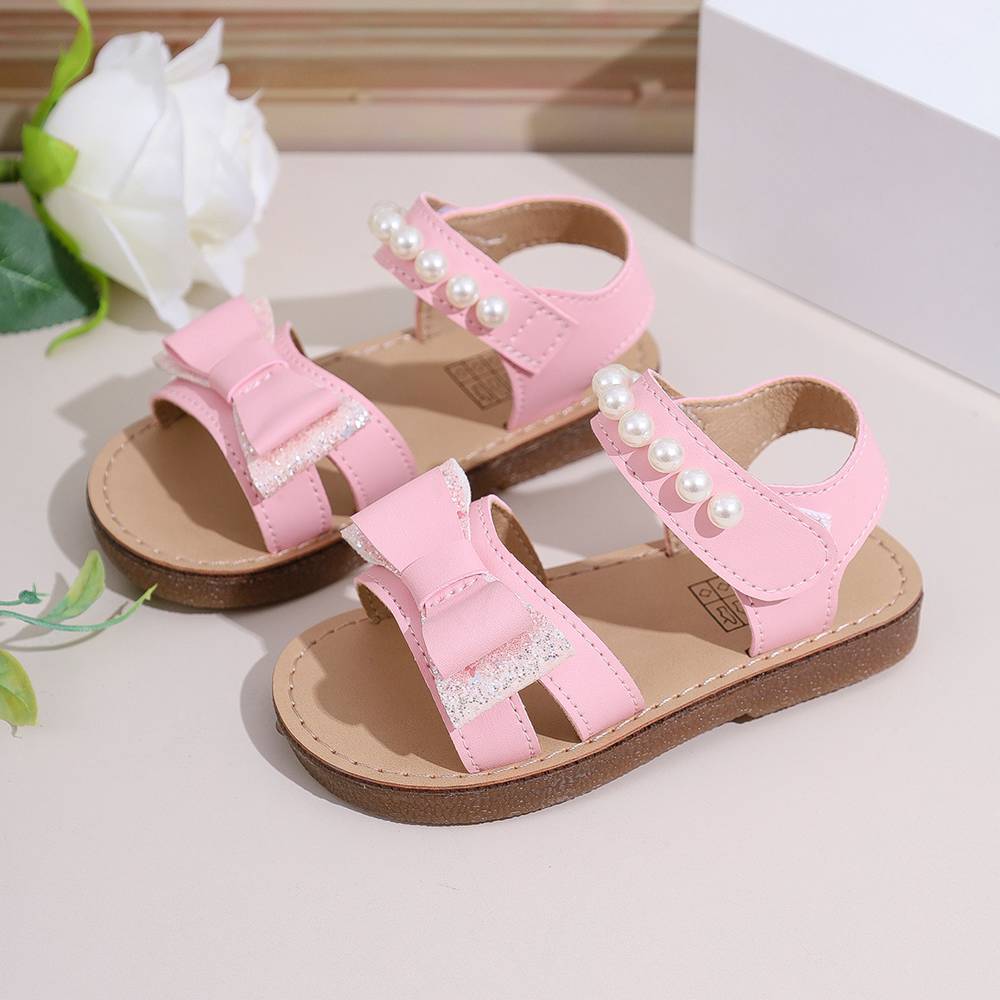
For wholesale kids’ sandals, keep the supplier’s insole-length chart separate from a child’s foot length. Hongle’s Pink Bow Style 1 page labels its millimetre chart as Insole Length and lists sizes 18–30. Use that chart to identify the requested size references, then ask for the measuring method and a labelled sample. Do not turn an insole value into a foot-length recommendation or an automatic size conversion.Official Pink Bow Style 1 appearance reference. Catalogue sizes are supplier statements; this article gives no independent fit, material, comfort or slip-performance assurance.Copy the named chart into the enquiryThe Pink Bow Style 1 product page identifies pink, flat kids’ sandals. Its size chart gives a millimetre interval for each supplier size label. Keep the heading Insole Length beside those values when preparing a quotation sheet. This preserves what the numbers describe when the sheet moves between merchandising, purchasing and the supplier.Supplier size label | Listed insole length | Supplier size label | Listed insole length18 | 113–115mm | 25 | 148–150mm19 | 118–120mm | 26 | 153–155mm20 | 123–125mm | 27 | 158–160mm21 | 128–130mm | 28 | 163–165mm22 | 133–135mm | 29 | 168–170mm23 | 138–140mm | 30 | 173–175mm24 | 143–145mm | Chart basis | Supplier catalogue insole lengthRetain each interval as written. Ask whether it describes a nominal range, a current measurement reference or another supplier-defined basis. A two-ended catalogue interval should not silently become a production tolerance.Ask for the endpoints used on the offered sampleOfficial top-view reference for identifying the insole area and the selected style.Request a marked reference showing where the insole-length reading starts and ends. Ask how the sample is positioned and whether the supplier measures the visible insole surface or another defined reference. An answer with a clear line and sample identity is more useful than a bare repetition of the chart. It gives both parties a shared basis for discussing the offered product.Keep any foot measurement supplied by the buyer in a different field. This prevents a customer-facing foot-length field from being populated with insole data. If a size conversion is needed for a retail system, request a supplier mapping for the current style and keep that proposed mapping separate until the buyer has reviewed it.Connect size labels to the actual sample pairAsk the supplier to label each submitted pair with the full Pink Bow Style 1 reference and its size. Record the chart version used for that sample. The bow appearance identifies the catalogue style, while the sample label identifies the size under review. Keep those two references together so that a matching pink photograph does not stand in for a specific size record.Where several sizes are proposed, give each one a separate row. Include the requested pair quantity, supplier size label and chart interval. Leave current availability and any alternative suggestion for the supplier’s response. This creates a usable enquiry without assuming that the entire catalogue range is immediately available.Send a ready-to-answer measurement requestA practical RFQ note is: “Please quote Pink Bow Style 1 using the requested supplier size labels. Confirm the current Insole Length chart, define the listed intervals and show the measuring endpoints on the offered sample. Label each sample pair with its style and size. Keep any proposed retail-size conversion separate from the insole chart.”• Product reference: Pink Bow Style 1 and its page link.• Size field: supplier label, listed insole interval and requested pairs.• Measurement response: endpoints, sample position and interval meaning.• Sample record: identifiable pair and current chart reference.The page also contains a size-up suggestion. Keep that separate from this procurement schedule rather than converting it into a universal rule. The schedule’s job is to record what the supplier means by each label and how the current sample relates to it.Keep a revised chart traceableAdditional official view of the same style; the catalogue photograph supplies no measurement scale.If the supplier changes a value or offers another size reference, preserve the earlier chart and identify the revision. Purchasing staff should be able to connect the final quoted pairs to the chart and sample used for the decision. Send the size rows through the Hongle contact page. Keep other styles in the footwear catalogue on their own size records.Frequently asked questionsDoes the chart describe foot length?Its heading is Insole Length. Keep foot measurements in a separate field and request any needed mapping.Are the listed intervals production tolerances?Their meaning is not defined. Ask the supplier before using them as acceptance limits.What should identify a submitted sample?The complete style name, supplier size label and applicable chart reference.Can the size-up suggestion replace the chart review?No. Confirm the current measuring basis and keep any sizing advice distinct from the procurement record.Product and contact referenceshttps://hlshoes.com/product/product/https://hlshoes.com/contact/https://hlshoes.com/products/
Get a Free Quote
Fill in the form and we'll get back to you within 24 hours.
✅
Thank you!
We've received your inquiry and will reply within 24 hours.