
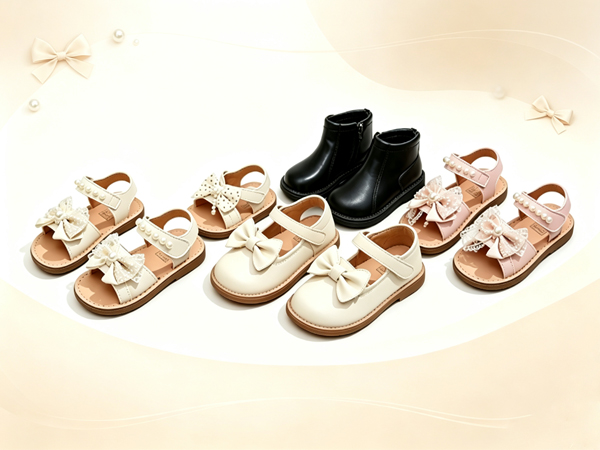
Bow Sandal RFQs: Map the Outsole Pattern
For a bow-sandal outsole-pattern RFQ, ask the manufacturer for the reference applicable to the actual Pink Bow Style 1 offer. Request its drawing or sample identifier, represented surface, orientation and left or right scope. Confirm which offered sizes and versions it covers, then connect the supplier response to the quotation. An appearance reference does not establish grip performance.
A footwear catalogue can show several decorated sandals while the purchasing discussion concerns one particular style. A useful outsole-pattern request identifies that style before asking for a drawing or sample reference. The buyer needs a clear relationship between the proposed footwear, the represented outsole and the manufacturer record, rather than a pattern description assembled from unrelated photographs.
Separate category group. Identify the actual offered style with the manufacturer; pictured sandals and boots do not establish one set, current variants, size markings or shared outsoles.
Start with the actual Pink Bow Style 1 offer
Use Pink Bow Style 1 as the catalogue reference and request the manufacturer model designation for the actual quotation. Ask which offered version the supplier means when it attaches an outsole record. Retain any supplier code beside the product name so that similar decorations or a shared colour description do not substitute for an identified commercial item.
The photograph above is a separate category group with sandals and boots. It does not establish a single supplied assortment or a common outsole across the pictured footwear. Keep these items under their own references and ask the manufacturer to identify the outsole record belonging to the quoted bow sandal.
Request the applicable drawing or sample reference
Ask whether the manufacturer can provide an outsole-pattern drawing, an identified sample reference or another record for the actual offer. Request the supplier designation and revision of what it provides. A general footwear illustration may help the discussion, but the manufacturer should explain its relationship to the offered style before the buyer records it as the applicable outsole reference.
Keep the record type explicit. If the response is a photograph, identify it as a photograph; if it is a drawing, retain the manufacturer drawing reference. Where the supplier proposes a sample instead, ask how it identifies that sample and which footwear version it represents. This avoids treating different kinds of reference as equivalent technical documents.
Buying field
Requested supplier response
Quoted style
Manufacturer designation and version corresponding to Pink Bow Style 1.
Reference type
Actual drawing, identified sample or other record proposed by the supplier.
Record identity
Manufacturer identifier and revision, with its applicable product reference.
Represented surface
Supplier description of which outsole surface or region the record shows.
Orientation
Manufacturer explanation of the view and any orientation labels used.
Side scope
Supplier identification of left, right or another explicitly stated scope.
Size applicability
Manufacturer statement of which offered size codes and versions the record covers.
Commercial link
Actual sample and quotation line associated with the accepted reference.
Separate decorated-sandal category scene. The drawing, swatches and marks do not identify the quoted Pink Bow Style 1, confirm a manufacturer size code or provide an outsole drawing or verified material.
Clarify represented regions and viewing orientation
Ask the manufacturer to explain which surface and regions its reference represents. Retain the supplier labels rather than assigning a technical meaning to shapes that happen to be visible. If a drawing includes several views, ask how those views relate to the actual sandal and which one is intended to identify the outsole pattern for the offer.
The separate decorated-sandal scene above includes a drawing sheet and swatches as display context. That setting does not make the sheet a manufacturer outsole drawing for Pink Bow Style 1. Request the actual applicable reference and its orientation explanation instead of interpreting a category scene as a dimensioned technical record.
Ask how left and right references are identified
Request the manufacturer identification of the side represented in the supplied record. If the supplier provides separate left and right references, retain each designation with its stated applicability. If it provides only one, ask what that record is intended to cover. Do not assume that an illustration is mirrored, shared or otherwise applicable to the opposite side without the supplier explanation.
The purchasing record can keep the manufacturer side designation, document identifier and product version together. Where a view or label is ambiguous, return that specific question to the supplier. There is no need for the buyer to invent groove counts, tread dimensions or a production method to establish which reference the manufacturer has actually proposed.
Actual Pink Bow Style 1 reference. Request the manufacturer’s applicable size-marking and outsole-pattern records; the photograph does not verify size fit, a marking system or grip performance.
Confirm the offered size and version scope
Ask which actual offered size codes the manufacturer associates with the drawing or sample. If it states that several codes share a reference, request that applicability in its response. If different versions have separate records, retain the relationship for each quotation line. The buyer should not infer that the pattern remains identical across an entire catalogue size range.
The Pink Bow Style 1 photograph above is the actual catalogue product reference used for the inquiry. It does not show a confirmed size-to-pattern relationship or verify friction, wear or child-safety performance. A model-specific appearance record and a claim-related test record answer different purchasing questions; keep the manufacturer description attached to the record it actually concerns.
Connect the accepted pattern reference to sample and quote
Request the actual sample identifier associated with the proposed outsole reference. Ask the supplier to state whether that sample represents the version and size code used in the quotation. Keep any difference visible so that an earlier display sample is not silently treated as the reference for a revised offer.
Before accepting the proposal, compare the style designation, reference revision, side scope and size applicability across the supplier response and quotation. If the manufacturer sends a replacement drawing or sample reference, request its relationship to the earlier record. For a repeat order, cite the accepted record and ask whether it remains applicable to the current offer. Retain the confirmed revision relationship without adding tooling, material, anti-slip or wear conclusions to a geometric-reference request.
Buyer FAQ
Does an outsole-pattern reference prove anti-slip performance?
No. Retain the manufacturer appearance reference under its stated scope and identify any separate claim-related documentation on its own terms.
Can a category sandal drawing identify this exact style?
Ask the manufacturer to identify the drawing applicable to the actual Pink Bow Style 1 offer.
Should one view be assumed to cover both sides?
Request the supplier statement of the represented side and any other intended applicability.
What should be checked when a size or version changes?
Ask which drawing or sample revision applies to the actual offered code and quotation line.
Use the Pink Bow Style 1 catalogue reference, keep other footwear category illustrations under their separate identities and request the applicable record through the manufacturer contact page.
Identify the actual style, offered version and supplier record.
Request the represented surface, orientation, side and size scope.
Keep the accepted reference revision with the sample and quotation.
bow sandal outsole pattern referenceB2B supplier sample record