
Bow Sandal RFQs: Confirm the Size Marking
For a bow-sandal size-marking enquiry, ask the manufacturer what size code or text is actually supplied, where it appears and which offered product size it identifies. Keep the physical marking reference with the product version, sample and quotation. A catalogue size chart does not establish a supplied mark, its carrier or a conversion to another retail sizing system.
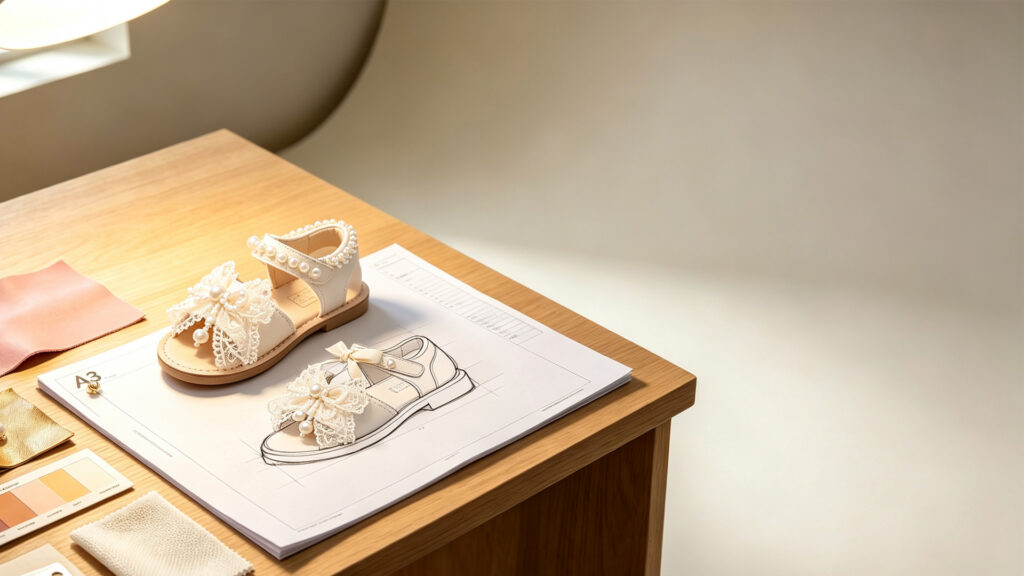
Separate decorated-sandal category scene. The drawing, swatches and marks do not identify the quoted Pink Bow Style 1, confirm a manufacturer size code or provide an outsole drawing or verified material.
Keep the offered bow style clearly identified
Hongle’s Pink Bow Style 1 listing provides a specific product reference with a catalogue size range and an insole-length chart. Use the actual offered style and version when requesting size-marking information. The website also presents other decorated sandals and boots in category imagery. Keep those appearances separately identified rather than treating the whole display as a shared marking system.
Ask the supplier which product and offered size its reply covers. Retain the manufacturer’s identifiers as supplied, including a separately identified variant where relevant to the proposal. The enquiry should allow the purchasing team to distinguish a size field in the commercial offer from a mark actually present on footwear or associated packaging.
Ask which object carries the actual size reference
Request the manufacturer’s description of where the supplied size reference appears, if any. Keep the actual marked object or carrier with the reply. A manufacturer might identify a location on footwear or provide an associated label or pack reference; the buyer should retain whichever arrangement the actual proposal contains rather than choosing a location from a general product photograph.
Ask the supplier to identify the relevant area on its applicable sample or reference image. Where a marking is not visible in the available view, preserve that limitation and request the manufacturer’s explanation. Do not infer an embossed mark, a printed insole code or an included hangtag simply because that arrangement would be convenient for receiving or retail presentation.
Separate category group. Identify the actual offered style with the manufacturer; pictured sandals and boots do not establish one set, current variants, size markings or shared outsoles.
Record the actual code and its manufacturer association
Where a size reference is supplied, request the actual code or text and ask which offered size it identifies. Keep the manufacturer’s association between that mark and the product record in the correspondence. A visible number by itself should not be assigned a meaning that the supplier has not provided for the actual offered item.
If the manufacturer uses another code on the product or pack, ask what that reference represents and how it relates to the quotation. Keep product identifiers, variant identifiers and size information clearly named in the record. The aim is to understand the supplied reference, rather than assume that every mark seen in a category image is a footwear size.
Buying field
Requested supplier response
Offered item
Actual Pink Bow Style 1 product and applicable version.
Marked object
Manufacturer-identified footwear area, label, pack or other actual carrier.
Supplied code
Actual size-related text or code where provided.
Size association
Supplier explanation of the corresponding offered size.
Sample reference
Applicable physical sample or manufacturer image showing that arrangement.
Commercial scope
Quotation line, current version and outstanding marking questions.
Separate a supplied mark from a measurement chart
The listing’s insole-length chart describes a catalogue measurement field. A supplied marking reference describes how the manufacturer identifies the offered size on an actual item or associated carrier. Retain each record for its own purpose. A buyer can request the relationship between them without turning a chart entry into a claim about a physical label or an accepted wearer fit.
Ask the supplier to explain any retail sizing terminology it actually uses for the proposal. Do not assign a regional system or perform a size conversion from an unconfirmed number. The size-marking enquiry should preserve the manufacturer’s stated association. Foot measurements, wearer suitability and a separate size-run quantity allocation require their own applicable information and should not be inferred from this marking record.
Associate the marking reply with its sample version
Keep the actual marked object, code and offered-size association with the manufacturer’s sample identifier. If a supplier sends another product view, ask whether it represents the same offered version and marking arrangement. A separately named sample reference lets another buyer understand the reply without relying on a general picture of several sandal styles.
Where the manufacturer changes the proposed code, carrier or product version, ask which previous reference is affected. Retain the revised explanation with the current quotation. Keep an unanswered marking question visible until the actual arrangement is confirmed. The buying record should not suggest that a requested printing or labelling service has been agreed merely because it appears on the buyer’s enquiry.
Actual Pink Bow Style 1 reference. Request the manufacturer’s applicable size-marking and outsole-pattern records; the photograph does not verify size fit, a marking system or grip performance.
Use the footwear images as product context
The homepage scene shows a pale decorated sandal on a drawing sheet with swatches nearby. A separate category group contains different sandals and black boots. These are footwear appearances, rather than an applicable technical drawing, a common size-marking schedule or a statement that every pictured style shares the quoted Pink Bow Style 1 configuration.
The actual Pink Bow Style 1 gallery provides a separate product reference for the enquiry. Its appearance does not verify a retail size conversion, wearer fit, grip or a supplied marking system. Complete the request with the manufacturer’s actual marking and sample association, keeping any unavailable carrier, code or product-version detail open for the supplier’s response.
Buyer FAQ
Does the catalogue size range confirm a physical size mark?
No. Ask the manufacturer what reference is actually supplied and where it appears for the selected offer.
What should accompany a supplied size code?
Keep the marked object or carrier, actual code, manufacturer size association, product version and sample reference together.
Can an unconfirmed marking be converted into another retail size?
Do not assume its system or meaning. Request the manufacturer’s actual interpretation and applicable product association.
How is this different from a size-run order matrix?
A marking record identifies the supplied code and carrier. A size-run matrix describes the commercial quantities requested or proposed for each offered size.
Use the Pink Bow Style 1 reference, identify other footwear appearances separately, and request the actual manufacturer size-marking record.
Identify the actual offered style and size reference.
Request the supplied mark, its carrier and manufacturer interpretation.
Keep the actual sample and quotation applicability together.
bow sandal supplied size marking referenceB2B supplier sample record