
Sandal Grip Claims: Request the Test Basis
When a sandal listing describes basic anti-slip performance, ask the supplier for the evidence behind that exact wording. The response should identify the tested product and outsole version, method, surface and conditions, reported result and any stated limitations. A TPR material label or product photograph alone does not answer those questions.
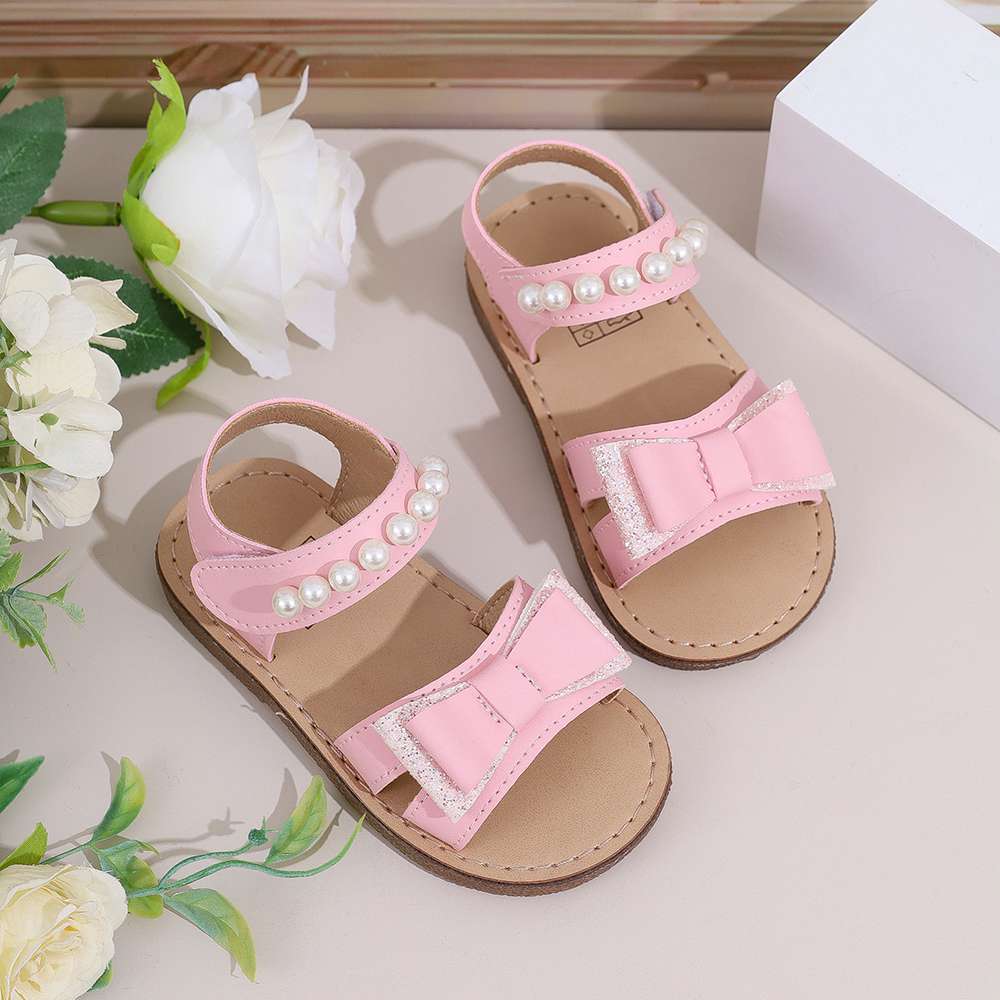
Pink Bow Style1 catalogue view. The product page describes a TPR outsole with basic anti-slip property; this upper view is not a grip-test record.
Begin with the exact catalogue claim
Hongle’s Pink Bow Style 1 page identifies a children’s sandal with a flat heel, PU upper and lining, and TPR outsole. Under Anti-slip Performance, the supplier writes “Standard TPR outsole with basic anti-slip property.” This is a specific supplier statement that a buyer can ask about, rather than a reason to invent a stronger claim.
For wholesale kids’ sandals, the useful next step is an evidence request attached to the quoted style. Ask what supports that description and which supplied version it covers. The purchasing outcome is a clear response about the basis and scope of the wording, not an assumed universal grip rating. Keep this question separate from the page’s sizing and comfort descriptions.
Link the evidence to the offered outsole
Start by identifying Pink Bow Style 1 in the enquiry, with the source URL and a catalogue photograph. Ask the supplier to confirm whether its response applies to the outsole offered in the quotation. A report for a different shoe, a different sole design or an unidentified material sample may answer a different question. Request the relationship in writing instead of silently treating all sandal evidence as interchangeable.
If the supplier provides supporting documents, look for the product identification used in them. Ask how it maps to the quotation’s style and outsole description. Where the response covers only a stated size or version, retain that scope. Do not extend a result to every size in the page’s 18–30 range unless the supplier supplies an appropriate explanation for that extension.
Question
Requested information
Purchasing purpose
Which product?
Style, sample and outsole identification
Match evidence to the offered version
How assessed?
Method and relevant conditions
Understand what was measured
What result?
Reported values or conclusion with units
Avoid replacing data with an adjective
What scope?
Covered version and stated limitations
Keep the quotation wording accurate
Ask for conditions before comparing results
A sandal grip report needs context. Ask the supplier to identify the method, the surface involved and whether the assessment used dry, wet or other stated conditions. If a document refers to a particular preparation, orientation or loading arrangement, retain those details with the result. These are requests for the actual assessment basis, not a proposed testing procedure to perform at home.
When two quotations include performance language, compare the available supporting information before comparing the adjectives. “Basic” in one catalogue does not create a numerical category that can be ranked against another supplier’s wording. Different methods or conditions may prevent a direct comparison. Record that difference and ask the supplier to clarify it instead of manufacturing a common score.
Another official view of the same listing. Use the identified style as a reference when asking which offered outsole version is covered by supporting information.
Separate the TPR label from measured performance
The Pink Bow Style 1 page names TPR as the outsole material. Keep that declaration in the material field. It does not, by itself, specify a friction value, a test surface or performance after wear. Likewise, a visible sole edge or a photograph of a tread pattern is an appearance reference, not the result of an identified grip assessment.
This distinction makes the supplier enquiry shorter. There is no need to turn every material answer into another performance promise. Ask for the offered outsole description once, then ask separately for the evidence behind the anti-slip wording. If the supplier has only a general catalogue statement, record that response clearly and decide whether additional information is needed for the intended purchasing decision.
Make missing evidence a clear quotation status
A practical response table can use “provided,” “awaiting clarification” and “not supplied” for each requested field. Those labels describe the information received; they do not constitute a product test verdict. If a document arrives without an identifiable sample or without legible conditions, return one focused question identifying the missing connection. Avoid treating a document filename as proof that the offered sandal was assessed.
Keep the agreed wording with the quotation revision. If the supplier later changes the outsole version, ask whether the earlier supporting information still applies. This is more useful than repeatedly collecting the same catalogue screenshot. It keeps the buyer’s description tied to the version being purchased and makes any unresolved evidence gap visible before the order is approved.
Official side and upper catalogue arrangement. Visible sole edges do not supply test conditions, measured grip or a guarantee for any surface.
A concise evidence request for this style
An RFQ attachment can state: “For Pink Bow Style 1, please identify the evidence supporting the catalogue’s basic anti-slip statement. Please include the assessed product and outsole identification, assessment method, conditions, reported result and applicability to the offered version.” The supplier can then answer the actual question without guessing which part of a general company presentation the buyer needs.
Attach the actual style reference and quotation version.
Keep catalogue wording separate from supplied test information.
Retain limitations alongside any reported result.
Leave unanswered fields visible rather than converting them into claims.
FAQ
Does the TPR label prove anti-slip performance?
It is the supplier’s material description. Request the actual method, conditions and result separately to understand the basis of the performance wording.
Can one report cover all sandal sizes?
Ask the supplier to define its applicability. Keep any stated size or outsole-version limits rather than extending them without supporting information.
What if no supporting document is supplied?
Record the catalogue statement and the missing evidence separately. Do not invent a test result or replace “not supplied” with a safety or performance conclusion.
Find other sourcing topics in the Hongle blog, or send the style-specific evidence request with your sandal enquiry.
wholesale kids’ sandalsoutsole evidencegrip claims