
Sandal Material RFQs: Separate Upper and Lining
For a Pink Heart Style material enquiry, keep three supplier fields separate: Upper Material PU, Lining Material PU and Outsole Material TPR. Ask the supplier what each description covers on the quoted version and which supporting information applies. The catalogue wording is a starting declaration, not an independent composition test or a description of every decorative part.
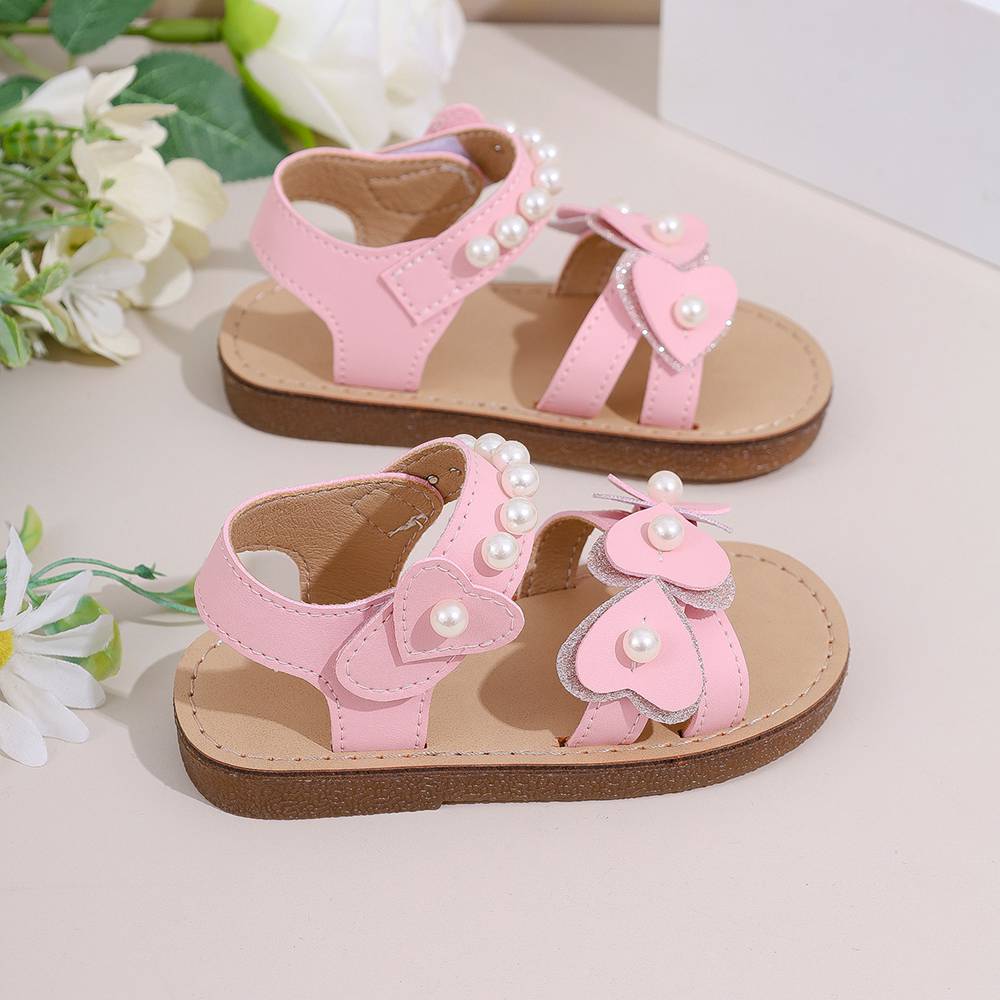
Pink Heart Style alternate side view. Use visible areas to locate material questions; the photograph does not verify the supplier’s PU or TPR declarations.
Preserve the three catalogue fields
A material response for a sandal should identify which part of the product it describes. Hongle’s Pink Heart Style page supplies a useful starting structure: Upper Material PU, Lining Material PU and Outsole Material TPR. Keep these as three separate supplier statements when preparing an enquiry for wholesale kids’ sandals. Combining them into one material cell would remove the distinction that the page already makes.
Attach the complete style name, selected catalogue image and offered version to the request. Ask the supplier to confirm whether the current quotation uses those descriptions and explain their component scope. Treat the answer as supplier-provided product information. Neither the wording nor the photographs independently establish composition, performance or an exhaustive list of every material in the finished sandal.
Ask which upper surfaces the answer covers
Use a marked image to identify the visible straps and any other area relevant to the upper description. Ask the supplier which offered components are included in that field. If the project needs a more detailed description of a surface, backing or layered component, request that detail explicitly. Do not fill in an unlisted construction simply because a strap looks smooth or has a particular colour.
Catalogue field
Supplier-listed wording
Scope question
Upper material
PU
Which straps or other offered components does this cover?
Lining material
PU
Which interior-facing surfaces are included?
Outsole material
TPR
Which sole component does the description identify?
Decorative details
No complete material map in these three fields
What additional description applies to the requested details?
Pink Bow Style1 is a separate product. Its appearance is catalogue context, not proof that a material response for Pink Heart Style applies to it.
Keep lining distinct from the visible footbed
The lining field needs an explicit boundary. Ask the supplier to mark the interior-facing areas to which its description applies and identify whether a visible footbed surface is included or described separately. The objective is a readable component map, not a buyer-created interpretation of the short catalogue label. Keep the supplier’s own answer beside the marked area so that later staff can understand its scope.
Upper and lining both being listed as PU does not settle whether their detailed constructions are identical. If the purchase requires additional information, ask for it under the relevant component rather than copying a response between the two rows. This is especially useful when a supplier’s supporting sheet has several entries: each entry should be connected to the part it actually describes.
Define the outsole reference and leave performance separate
For the outsole, retain TPR as the catalogue wording and request the applicable description for the quoted version. The side view shows an edge of the sole area, which can help locate a question, but it does not describe every layer or hidden component. If the buyer needs a sectional explanation or another view, request that information from the supplier without inventing a structure from the photograph.
Keep material information separate from any proposed performance requirement. A field labelled outsole material does not itself answer a question about slip performance, wear or another use property. Identify any required supporting information independently and connect it to the correct product. This keeps a purchasing specification useful without turning a short material term into a broad product assurance.
Preserve upper, lining and outsole as separate fields.
Ask the supplier to mark the component scope of each description.
Request additional detail only where the project needs it.
Connect each supporting item to the quoted version and component.
Pink Butterfly Style is another separate listing. Printed insole symbols and visual surfaces are not treated as a material test or certification evidence.
Make supporting information usable
When the supplier provides a declaration or product sheet, record its title, date or revision and the product reference it covers. Ask which component row it supports. A document for an unidentified material is harder to use than a response that connects the material, component and offered sandal. Keep open scope questions visible instead of describing the documentation as complete before those links are clear.
The Pink Bow Style 1 and Pink Butterfly Style images show other catalogue products. Do not use visual similarity as a reason to transfer a declaration between them. If the supplier says a common description applies, request an explicit product scope. The same principle applies when Pink Heart Style is revised: identify any changed part and ask which earlier information remains applicable.
The final purchasing output can be concise: a confirmed style, three component rows, the supplier’s scope explanation and references to applicable supporting information. Keep any decorative details that need an additional answer in their own row. This makes later product-data preparation more accurate, while leaving performance assessment and any market-specific review to the relevant process.
Buyer questions
Can the three material terms be combined into one description?
Keep the page’s component distinctions. The supplier should explain upper, lining and outsole scope rather than leaving the buyer to infer which term describes which area.
Do insole symbols verify the material statement?
Use the supplier’s applicable information and component mapping. A photographed symbol is not an independent material test or a complete declaration for the offered product.
What if a decorative component is not covered?
Identify it on the reference image and request an additional supplier description. Do not assume that an upper or lining field automatically includes every decoration.
Send the component questions through Hongle’s contact page. Keep the response with the quotation; the blog does not replace the offered product’s material information.
wholesale kids sandalsupper lining outsolesupplier material scope